Car Wash Membership Health Is About LTV—But Not the Way We're Calculating It Today
AI & Data, Industry Trends, Strategy
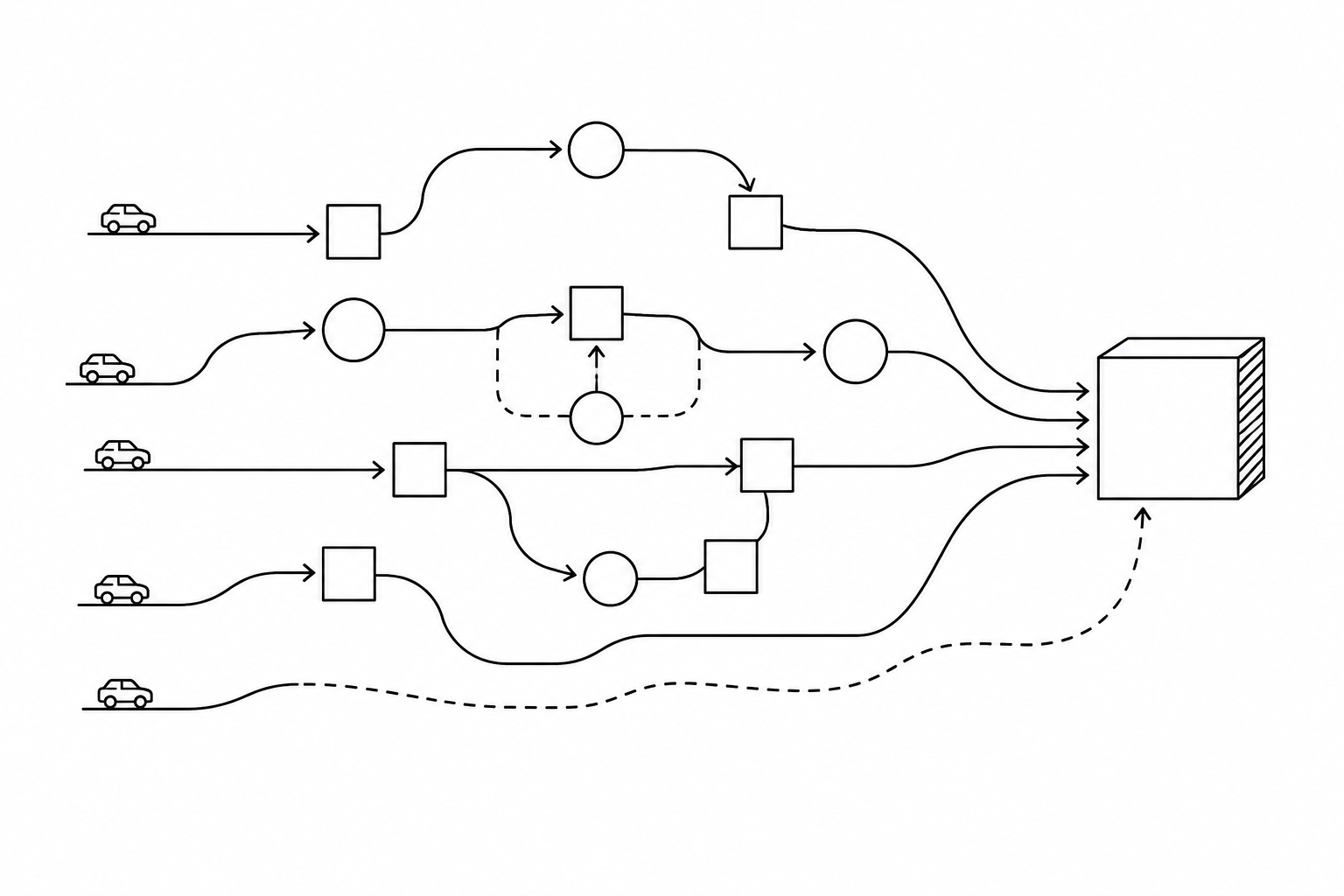
Back in the day we used to look at a customer and think of the opportunity in terms of $10 and $20 bills. With membership, one of the biggest shifts has been realizing that every new member represents multiple $100 bills over time. That's why I love that we're finally starting to talk about customer lifetime value (LTV) as an industry.
LTV forces us to think beyond the initial sale. Instead of asking, "How many memberships did we sell?" we begin asking, "What is this customer worth over time?"
That's an important shift.
According to our Rinsed data (and broader industry data), the average member LTV is roughly $400. Most operators arrive at that number by multiplying average membership revenue by an estimated customer lifespan, with lifespan typically calculated using the current churn rate.
That's a perfectly reasonable place to start. But I don't think it's where we should stop.
Imagine a doctor walking into a waiting room, taking everyone's blood pressure, averaging the results together, and declaring, "This is a pretty healthy group."
The average tells you almost nothing about the people sitting in front of you—or what to do to improve their health. One patient may be perfectly healthy. Another may need immediate treatment. The average masks both.
I think we're making a similar mistake with LTV.
When we blend every customer into a single number, we lose sight of the differences that actually matter.
Level 1: Measuring the Health of a Location
Operators absolutely need a top-level LTV metric. If you're comparing one location against another, you need a common scorecard.
My recommendation is to make that number a little more honest.
Instead of basing LTV purely on membership revenue and average lifespan, calculate it using expected gross profit per member. Start with average monthly membership revenue, subtract promotional discounts, payment processing fees, and the variable cost of each member's washes, then multiply by average active months.
It won't be perfect.
But it will be a much better reflection of the economics of the business than revenue alone. Especially since usage costs can be pretty divergent from member to member (I’m looking at you Uber driver).
Imagine two express exterior car washes. Both report an average customer LTV of $400 and both have 5,000 active members.

*Gross profit represents profit remaining after the variable costs of serving members. Variable COGS includes chemicals, utilities, credit card processing, and other costs that increase with each wash.
Same LTV. Very Different Economics.
$360,000 less annual gross profit
84,000 more member washes every year
$126,000 more in annual variable operating costs
The two businesses arrived at the same reported LTV in very different ways. Wash A earns more profit every month but retains members for a shorter period. Wash B keeps members longer but gives back much of that value through heavier usage, promotional discounts, and higher operating costs.
The top-level LTV tells you which location is healthier.
It doesn't tell you why.
Level 2: Understanding Why
Once you know Location A has a $420 LTV and Location B has a $360 LTV, the interesting question isn't which location is better. It's why.
That's where cohorts become so powerful.
The first step is deciding which customer groups you want to understand and intentionally tagging them in your POS or CRM. Every operator may choose different cohorts depending on their business, but examples might include members acquired through a first-month promotion, full-price members, driveway sales, online signups, retail converts, winbacks, family plans, or even members who washed more than three times during their first month.
Now you're no longer asking:
"What's our average LTV?"
You're asking:
"What kind of customer did this customer journey create?"
Promotions should no longer be judged simply by how many memberships they sold. They should be judged by the quality of the cohorts they produce.
Did those members stay six months?
Did they become profitable?
How much did they wash?
Did they convert from promotional pricing to full price?
Those answers should shape the next promotion, not just the monthly marketing report.
Level 3: Improving It
This is where dashboards become far more valuable.
Whenever I talk to operators about dashboards or data, I usually ask one question before we look at a single chart:
"What decision are you trying to make?"
The best dashboards don't simply report what happened. They help us decide what to do next.
Should this cohort receive different messaging?
Should we change the introductory offer?
Should we adjust pricing?
Should we redesign onboarding?
Should we stop running this promotion entirely?
Now LTV stops being a report.
It becomes a management system and a playground for experimentation.
This is also where I think AI becomes genuinely useful.
Once your POS and CRM data are organized into meaningful cohorts, and accessible to AI, it can recognize patterns across millions of customer journeys that humans could never see on their own.
Which promotions consistently create the healthiest cohorts?
Which onboarding sequence produces the most profitable members?
Which first-30-day behaviors predict long-term value?
Which pricing experiments maximize profitability?
Those aren't reporting questions. They're optimization questions.
I'm glad we're no longer seeing our customer opportunities in terms of $10 and $20 bills. Understanding LTV helped us recognize that membership fundamentally changed the economics of our industry. It helped us realize that each new member isn't just another car, it's a long-term asset.
But I think we've reached the point where calculating LTV is no longer the competitive advantage.
Understanding it is. And improving it is.
The operators who lead the next decade won't simply have the highest reported LTV.
They'll be the ones who understand why their customers become more valuable, and how to build better promotions, better pricing, and better customer journeys to intentionally create more of them.